
Dental Health
Bleeding gums when you brush: what it means and what to do
Pink in the sink is common enough that most people ignore it. It is also the earliest warning sign of gum disease — and the stage at which it is still completely reversible.
· 9 min read · Reviewed by Dr. Sakshi Garg, B.D.S
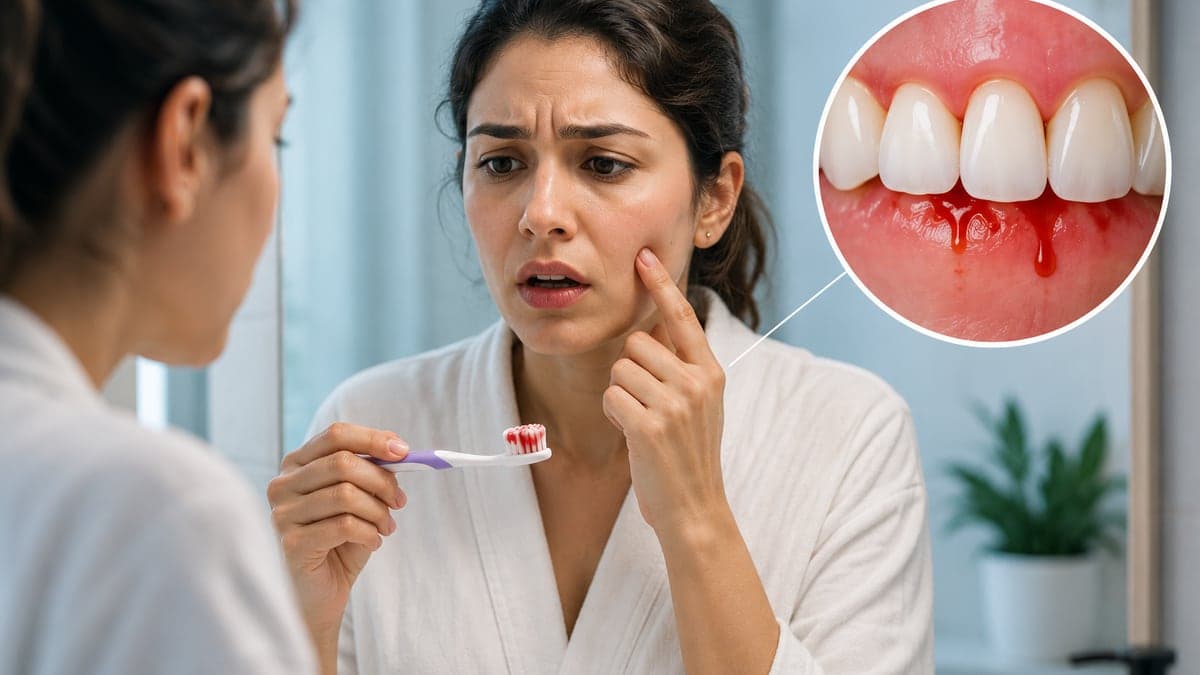
Healthy gums do not bleed. That is the short version. If you see pink in the sink most mornings, it is worth understanding what your mouth is telling you — because at this stage the problem is almost entirely reversible, and it does not stay that way indefinitely.
It is usually not because you brushed too hard
This is the most common assumption, and it leads people to brush that area more gently — which makes things worse, because the plaque causing the problem stays put.
Gums bleed because they are inflamed. The inflammation comes from plaque, a soft film of bacteria that forms along the gumline within hours of cleaning. Left alone for a day or two, plaque hardens into tartar (calculus), which is firmly bonded to the tooth and cannot be brushed off. Tartar then holds more plaque against the gum, and the cycle continues.
So bleeding is a sign that bacteria are sitting where they should not be — not that your brushing is too vigorous. Brushing hard with a stiff brush causes a different problem, gum recession and worn tooth surfaces, but it is not the usual cause of bleeding.
Gingivitis and what comes after it
Gingivitis — reversible
Inflamed, bleeding gums with no bone loss is gingivitis. The gums may look redder and puffier than usual and bleed when brushed or flossed. At this stage it is fully reversible: remove the tartar professionally, clean properly at home, and the gums return to health within a couple of weeks.
Periodontitis — not reversible
If gingivitis is left long enough, the inflammation spreads deeper and begins destroying the bone holding the teeth in. That stage is periodontitis. The bone that is lost does not grow back. Pockets form between tooth and gum that you cannot clean at home, teeth loosen, and eventually they are lost.
This is a more common cause of tooth loss in adults than decay is, and it is largely painless until it is advanced — which is exactly what makes it easy to ignore. Unlike a toothache that wakes you at night, gum disease gives you almost no warning that would force you into a dental chair.
Other signs to look for
- Gums that look red and swollen rather than firm and pale pink
- Persistent bad breath, or a bad taste that returns soon after brushing
- Gums that appear to be receding, or teeth that look longer than they used to
- Sensitivity at the gumline, where the root surface has become exposed
- A change in how your teeth meet, or teeth that feel slightly mobile
- Tartar visible as a hard yellow or brown deposit, usually behind the lower front teeth
Loose teeth or a changed bite are late signs. Anyone noticing those should be examined sooner rather than at the next routine visit.
What makes it worse
- Smoking or chewing tobacco — and it also masks the bleeding by constricting blood vessels, so the warning sign disappears while the disease progresses
- Diabetes, particularly when blood sugar is poorly controlled; the relationship runs both ways, since gum inflammation makes blood sugar harder to control
- Pregnancy and hormonal changes, which make gums respond more strongly to the same amount of plaque
- Crowded or overlapping teeth that are difficult to clean between
- Mouth breathing, which dries the gums at the front
- Some medications that cause gum overgrowth or dry mouth
- Skipping cleaning between the teeth entirely
What actually fixes it
Two things, and both are needed. One is a single appointment; the other is daily and ongoing.
Professional scaling
Tartar has to be removed professionally — no toothbrush, mouthwash or home remedy shifts it. Ultrasonic scaling uses high-frequency vibration and a water spray to lift deposits off the tooth surface and just below the gumline, followed by polishing.
For most people this is one appointment. Where gum disease is more advanced and pockets have formed, deeper cleaning below the gumline may be needed, sometimes over more than one visit.
Your daily technique
After scaling, the work is yours and it is not complicated:
- Brush twice a day for a full two minutes, with a soft or medium brush.
- Angle the bristles at about 45 degrees towards the gumline — that junction is where gum disease starts, and it is what most people miss.
- Use small circular movements rather than a hard scrubbing action.
- Clean between the teeth once a day with floss or interdental brushes. A toothbrush physically cannot reach the surfaces between teeth, which is precisely where the problem tends to begin.
- If you use mouthwash, use it at a different time from brushing, so it does not rinse away the concentrated fluoride left by toothpaste.
Interdental brushes are usually easier to use well than floss, and for anyone with gaps between the teeth they clean more effectively. A dentist can tell you which size fits your spaces.
What to expect in the first two weeks
Expect some bleeding for the first several days of cleaning properly. That is inflamed tissue being disturbed, not damage being done, and stopping because of it is the one thing guaranteed to keep the cycle going.
Bleeding typically settles within one to two weeks as the gums recover. Teeth may feel slightly more sensitive for a few days after scaling, especially to cold, as surfaces that were covered by tartar are exposed. That usually fades; a desensitising toothpaste helps in the meantime.
If bleeding continues beyond two or three weeks of genuinely good cleaning, that is the point to be re-examined rather than to keep waiting it out.
Myths worth abandoning
- "Bleeding means stop brushing there." The opposite — that area needs cleaning most.
- "Salt water rinses will cure it." Rinsing soothes inflamed tissue but does not remove tartar or plaque from between the teeth.
- "Bleeding gums are normal." Common, but not normal. Healthy gums do not bleed when cleaned.
- "A harder brush cleans better." It causes recession and wear without removing more plaque. Technique beats force.
- "It runs in my family, so nothing can be done." Susceptibility varies, but plaque control changes the outcome in every case.
How often should you have your teeth cleaned
For most people, once every six to twelve months. More frequently if your gums bleed easily, you smoke, you have diabetes, you are pregnant, or you have had gum disease before.
Regular scaling is one of the highest-value things you can do for your teeth — it costs a fraction of what treating advanced gum disease or replacing lost teeth does, and unlike most dental treatment it prevents rather than repairs.
If your gums have been bleeding for a while, book an examination. Gum disease is slow, painless and easy to ignore, which is exactly what makes catching it early worth doing. At DentoCare that assessment includes checking whether any bone has been lost — the difference between a problem that reverses and one that only stops getting worse.
Frequently asked questions
Why do my gums bleed when I brush?
Because they are inflamed by plaque sitting along the gumline. Plaque hardens into tartar within a couple of days, which holds more plaque against the gum and keeps the inflammation going. It is a sign that bacteria are sitting where they should not be — not that you are brushing too hard.
Should I stop brushing where my gums bleed?
No. That is the area that most needs cleaning. Expect bleeding for the first several days of cleaning properly — it is inflamed tissue being disturbed, and it usually settles within one to two weeks as the gums recover.
Can bleeding gums heal on their own?
Gingivitis can reverse completely, but only once the tartar is removed — and tartar cannot be brushed off, so it needs professional scaling. Without that, home cleaning alone rarely resolves it because the deposit holding the bacteria stays in place.
Is bleeding gums the same as gum disease?
It is the earliest stage of it. Bleeding with no bone loss is gingivitis, which is fully reversible. If it is left long enough the inflammation destroys the bone holding the teeth in, which is periodontitis — and that bone does not grow back.
Does scaling damage or loosen teeth?
No. This is a common worry, and it usually comes from teeth feeling different afterwards because heavy tartar has been removed. Where tartar was splinting already-loose teeth, removing it can reveal mobility that gum disease had already caused — the scaling did not cause it. Teeth may be sensitive to cold for a few days.
How much does teeth cleaning cost in Sonipat?
It depends on how much deposit there is and whether cleaning below the gumline is needed. You are given the figure after the examination and before treatment starts. Call DentoCare on +91 90503 21319 for current charges.
Can bleeding gums cause bad breath?
Yes — persistent bad breath and a bad taste that returns soon after brushing are both common with gum inflammation, because the bacteria involved produce sulphur compounds. Treating the gum problem usually resolves the breath issue as well.